

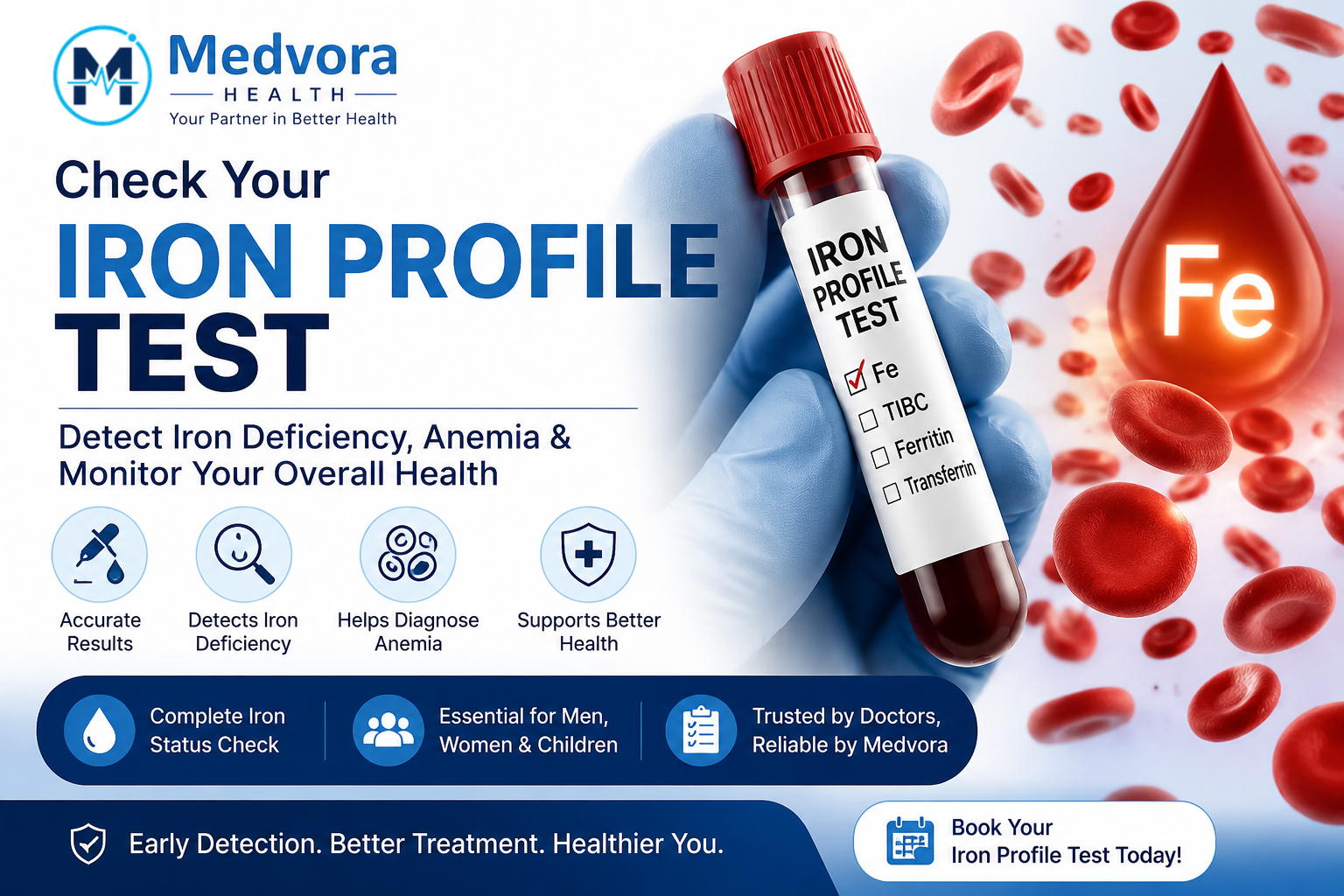
Iron deficiency can cause fatigue, weakness, and anemia. Learn about the Iron Profile Test, its symptoms, diagnosis, normal iron levels, and why timely testing is essential for better health.
Iron is an essential mineral that helps your body produce hemoglobin, the protein in red blood cells responsible for carrying oxygen throughout the body. When your iron levels become too low or too high, it can lead to serious health problems such as anemia, fatigue, and organ damage.
An iron profile test is a comprehensive blood test that evaluates your body's iron status. It helps doctors diagnose iron deficiency, iron overload, and related disorders before they become severe.
At Medvora Health, we provide accurate and reliable iron profile testing with quick reports to help you take charge of your health.
What Is an Iron Profile Test?
An iron profile test is a group of blood tests that measures different aspects of iron in your bloodstream. Rather than checking only your iron level, it evaluates how much iron is available, transported, and stored in your body.
This test is commonly recommended if you experience symptoms of anemia, chronic fatigue, or unexplained weakness.
What Is Included in an Iron Profile Test?
A standard iron profile test generally includes:
- Serum Iron—Measures the amount of iron circulating in your blood.
- Total Iron Binding Capacity (TIBC)—Determines how well your blood can transport iron.
- Transferrin Saturation – Calculates the percentage of transferrin carrying iron.
- Unsaturated Iron Binding Capacity (UIBC)—Measures unused iron-binding capacity.
- Ferritin (often recommended separately)—Indicates the amount of stored iron in your body.
Together, these tests provide a complete picture of your iron metabolism.
Symptoms of Iron Deficiency
Low iron levels may develop gradually. Common symptoms include:
- Constant tiredness
- Weakness
- Pale skin
- Shortness of breath
- Frequent headaches
- Dizziness
- Brittle nails
- Hair loss
- Cold hands and feet
- Difficulty concentrating
- Rapid heartbeat
- Restless legs syndrome
If these symptoms persist, your doctor may recommend an iron profile test.
Why Is an Iron Profile Test Done?
Doctors use this test to:
- Diagnose iron deficiency anemia
- Detect iron overload disorders
- Monitor iron supplementation treatment
- Investigate chronic fatigue
- Evaluate nutritional deficiencies
- Assess chronic blood loss
- Diagnose certain liver disorders
- Monitor chronic inflammatory diseases
Who Should Get an Iron Profile Test?
You may benefit from this test if you:
- Feel tired most of the time
- Have heavy menstrual bleeding
- Are pregnant
- Follow a vegetarian or vegan diet
- Have gastrointestinal disorders affecting iron absorption
- Experience frequent blood loss
- Have chronic kidney disease
- Have a family history of iron overload disorders
How Is Iron Deficiency Diagnosed?
Doctors diagnose iron deficiency by combining:
- Medical history
- Physical examination
- Complete Blood Count (CBC)
- Iron Profile Test
- Ferritin Test
- Additional tests if necessary
Together, these help identify both the cause and severity of iron deficiency.
Normal Iron Levels
Although normal values may vary slightly between laboratories, typical reference ranges include:
| Test | Normal Range |
|---|---|
| Serum Iron | 60–170 mcg/dL |
| TIBC | 240–450 mcg/dL |
| Transferrin Saturation | 20–50% |
| Ferritin | Varies by age and gender |
Always discuss your results with your healthcare provider for accurate interpretation.
Is Fasting Required?
In many cases, fasting for 8–12 hours may be recommended because food can temporarily affect serum iron levels.
Follow your healthcare provider's instructions before the test.
How Is the Test Performed?
The procedure is simple:
- A healthcare professional cleans your arm.
- A small blood sample is collected from a vein.
- The sample is sent to the laboratory.
- Results are generally available within 24–48 hours.
The entire blood collection process usually takes less than five minutes.
What Causes Low Iron Levels?
Iron deficiency may occur due to:
- Poor dietary intake
- Heavy menstrual bleeding
- Pregnancy
- Internal bleeding
- Stomach ulcers
- Colon polyps
- Poor iron absorption
- Celiac disease
- Chronic kidney disease
- Frequent blood donation
What Causes High Iron Levels?
Elevated iron levels can result from:
- Hemochromatosis
- Multiple blood transfusions
- Excessive iron supplements
- Liver disease
- Certain blood disorders
Can an Iron Profile Test Detect Anemia?
Yes. An iron profile test plays an important role in identifying iron deficiency anemia. However, it is usually interpreted alongside a Complete Blood Count (CBC) and Ferritin Test for an accurate diagnosis.
Tips to Maintain Healthy Iron Levels
- Eat iron-rich foods like spinach, lentils, beans, eggs, meat, and fish.
- Include vitamin C-rich foods to improve iron absorption.
- Avoid excessive tea or coffee immediately after meals.
- Take iron supplements only if recommended by your doctor.
- Schedule regular health checkups if you're at risk of iron deficiency.
Why Choose Medvora Health?
At Medvora Health, we are committed to delivering:
- Accurate and reliable laboratory testing
- Experienced healthcare professionals
- Quick and secure reports
- Affordable diagnostic services
- Modern laboratory technology
- Patient-focused care
Your health deserves timely and accurate diagnosis.
Frequently Asked Questions (FAQs)
What is an iron profile test?
An iron profile test measures different components of iron in your blood to evaluate iron deficiency or iron overload.
Can an iron profile test detect anemia?
Yes. It helps diagnose iron deficiency anemia when combined with other blood tests.
Is fasting required?
Many laboratories recommend fasting for 8–12 hours before testing.
How long does the test take?
Blood collection usually takes less than five minutes.
Who should get tested?
People with fatigue, weakness, heavy menstrual bleeding, pregnancy, nutritional deficiencies, or suspected anemia.
Conclusion
Iron deficiency is one of the most common nutritional disorders worldwide, but it is also one of the easiest to diagnose with timely testing. An iron profile test provides valuable insights into your body's iron balance and helps identify deficiencies before serious complications develop.
If you're experiencing symptoms such as fatigue, weakness, dizziness, or unexplained anemia, consult your healthcare provider. Early diagnosis through an iron profile test at Medvora Health can help you receive the right treatment and maintain long-term wellness.